
Thursday, October 1st 2026

Micron CEO Says Memory Supply Will Be Much Tighter in 2027 and 2028 Than in 2026
Micron CEO Sanjay Mehrotra says memory and storage supply will likely be much tighter in 2027 and 2028 than it was in 2026. He made the remarks during Micron's fiscal Q4 2026 earnings call on September 30, where the company reported record quarterly revenue of $54.2 billion. Here's what he said: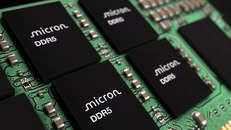
 In June, Micron CEO said they expected industry supply to improve gradually in 2028, but couldn't predict when supply would catch up with demand. The company now says it still has no line of sight to a balance, even with additional industry cleanroom space planned. New capacity takes time as well, since Micron's Idaho ID2 fab is only expected to start wafer output in late 2028. Mehrotra also said more than 75% of Micron's 2027 output is already committed to customers. On the consumer side, Micron said DRAM prices rose in the high-teens percent range last quarter, with NAND up about 30%. It looks like relief isn't close, although these are company projections and could change.
Source:
Micron Q4 2026 Earnings Call Transcript
Industry demand has strengthened since our last earnings call, and we expect memory and storage supply-demand conditions to be much tighter in fiscal 2027 and 2028 than they were in 2026. AI is becoming super intelligent, and memory enhances this intelligence and the competitiveness of our customers' platforms. Even with additional industry DRAM clean room space plans with robust demand trends, including new upside requests from customers, we do not have line of sight to when supply and demand will return to balance.


35 Comments on Micron CEO Says Memory Supply Will Be Much Tighter in 2027 and 2028 Than in 2026
The dram shortage and price increases will continue cause we said so - DRAM Cartel
What else can be done? Are we supposed to pull out the War Powers act again and bulldoze a few national parks to make more fabs?The shortage is not fake. Unless you have evidence all the money being paid for RAM is fake, and all the orders are fake. In which case you should be talking to the SEC.
I think for every quarter earnings call, the speeches are going to become so toxic-positive, the more we hear about news like these. Or these.
It is not artificial shortages, they can't produce enough, and yes, the data centers are the root cause of this because THEY are hording for the future, since they can't build fast enough because of shortages all along the supply chain and the grid equipment is back-ordered as well
The only fix is to have all lenders stop giving data centers blank checks, and that just isn't going to happen, they could care less if the bubble bursts, they will still get paid no matter what
It is also not price fixing because of the above, no matter what price the DRAM makers set, the data center guys STILL buy it
1. cap the amount of memory that can be consumed by any one industry during shortages.
2. place minimum allocation quotas for each industry during shortages
3. Produce less HBM. HBM takes 3 times as many wafers to produce compared to traditional DDR5. As Micron pointed out, DDR5 is already more profitable to boot.
4. Add a fee that kicks in above a certain purchase volume that increases the more capacity a company books. This ensure the cost burden of expansion falls on the people causing the shortage.
These are things a non-cartel memory industry would implement, because you wouldn't screw over your existing customers like this if you thought they had other options
Memory production investments represent around a 29% YoY increase but it should be noted that 2022 and 2025 both saw similar expenditure so that 29% increase is the total increase as compared to the last speak. Certainly not what I'd call an industry rushing to meet historic demand.
In fact one has to wonder just how much of that is eaten up by cost increases brought on by AI. The cost of building has gone up as has the materials.
The cost isn't what concerns them given their profits but to people looking to see if they are tackling the worse shortage in the industry's history, it makes their additional investments seem even less impressive.
They've secured contracts guaranteeing them record high minimums but they are very clearly still hedging their bets that in case an AI crash, supply won't crash the market. As demonstrated above, they are easy and equitable solutions without massive capEx. They just don't want to.
2028 is a thing because hyperscalers should start having ROI and AI scaling has plateaued anyway, meaning even the AI DCs competing with them are not ordering more components. For us it's 2030 because the cartel says so. Even though there are voices of industry outside of the cartel becoming louder, that see their businesses at risk.